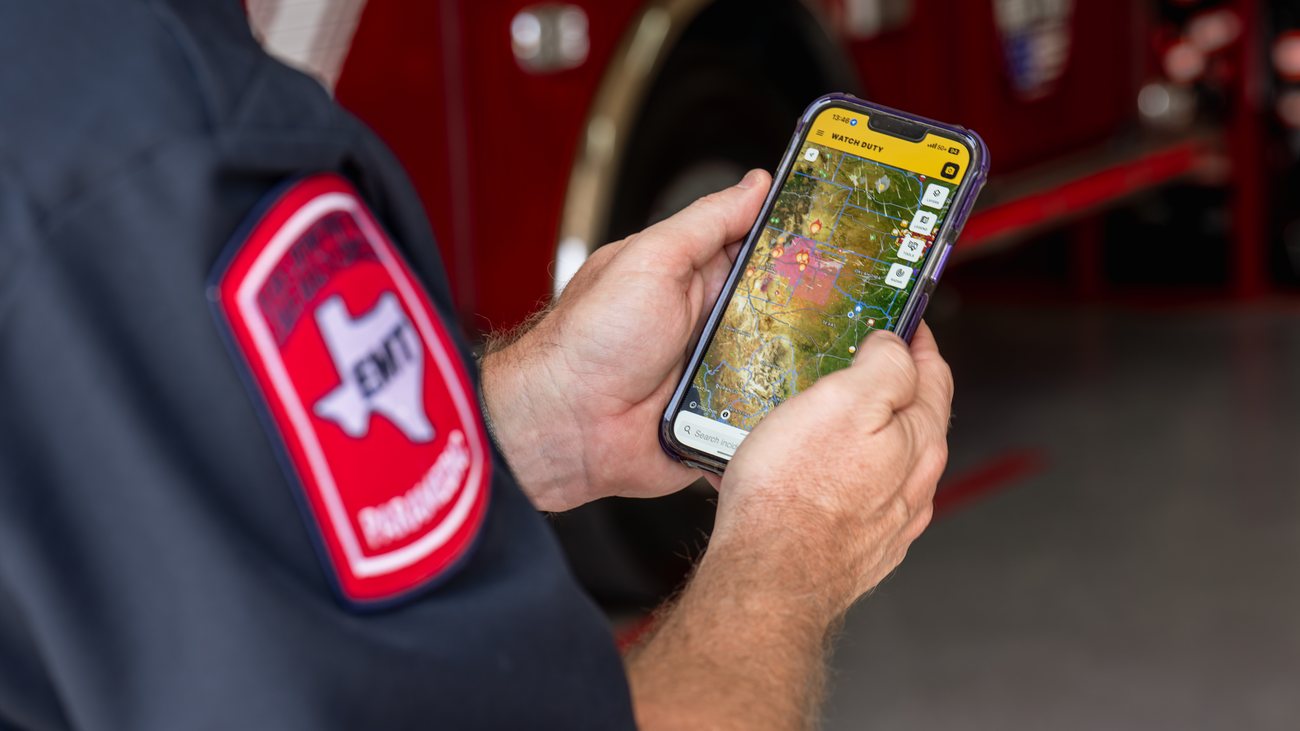
Google published a case study on November 20, 2026 about a tool it built with Watch Duty, the nonprofit wildfire alert app staffed by active and retired firefighters, dispatchers and first responders. A dedicated group of Google engineers and researchers spent six months embedded with the organization, through a Google.org Fellowship, to turn analog fire radio into clean, searchable text. The post reports the outcome of that build and little else: no model is named, no running cost is given, and nothing says whether another agency could ever use it.
Watch Duty sends push alerts to more than 16 million people. Before the tool, the first word of a new fire still arrived over decades-old VHF radio, mixed with engine noise, wind, static and fast tactical jargon, and reporters monitored up to 20 feeds by hand to catch it.
What was actually released
A description of an internal system, not a product. The tool removes static and translates firefighting terminology into text, then pushes a new dispatch to a reporter so the incident can be verified. What Google published is the shape of the build and its outcomes, in aggregate, without the specification a developer would need to copy it: not the model, not the prompt, not the serving cost.
The scale paragraph is the most useful part of the post, because it prices the work in hours and feeds rather than in adjectives.
| Item | Figure published by Google |
|---|---|
| Radio audio used for training | More than 20,000 hours |
| Time the Google team spent embedded | Six months, full time |
| Feeds transcribed today | About 400, more than 200 hours of speech a day |
| Capacity designed and tested | More than 10,000 feeds at once |
| Google.org support in 2024 | $2 million, plus $300,000 in Cloud credits |
| People Watch Duty alerts | More than 16 million |
The one operational number is detection time: under 30 seconds from radio audio to a signal in a reporter’s queue, in areas where nothing else catches a dispatch automatically. Google also says the system was designed and tested to handle more than 10,000 feeds at once, which is roughly 25 times the network it runs on today. That headroom is a design decision, not a measured result, and the post does not say what a feed costs.
What the claim rests on
Every number in the post comes from the two parties that built and funded the system. There is no test set, no reference transcript, no held-out audio and no named model, so nothing here is a benchmark that another team can reproduce. That does not make the figures false. It makes them a project report.
| Measure | Before | After |
|---|---|---|
| Word error rate on degraded VHF radio | 38% | 22.34% |
| Reporter satisfaction with radio transcription | 35.3% | 92.3% |
The word error rate is the honest figure, and the least flattering. A pipeline built to strip static and read firefighting vocabulary still gets roughly one word in four wrong on degraded radio. For a buyer, 22.34% is the realistic band for narrow-band analog audio with overlapping voices, and a clean-audio score an order of magnitude better says almost nothing about that input.
The satisfaction jump is the more interesting of the two, because it moved about four times further than the error rate halved. Google explains it as the tool removing the strain of deciphering audio, which suggests the reporters were not grading accuracy in the abstract. They were grading whether the queue handed them something worth checking.
What the post actually demonstrates
- A fire that starts at night can still reach a phone: the Railroad Fire in Washington in July 2026 produced the first overnight Critical Alert Watch Duty has sent, a push that breaks through a user’s do-not-disturb mode.
- The first 911 dispatch for that fire was transcribed off noisy radio in under 30 seconds, before a human had listened to it.
- The gain is attributed to noise removal and a firefighting glossary, not to a bigger model, which is the part of the build another team could copy.
What Google does not publish
- No detection rate. Not how many dispatches the tool missed, and not how many signals it raised that turned out to be nothing. For a system built to catch fires, that pair matters more than word error rate.
- No model name, no test set, no latency distribution beyond the single under 30 second figure, and no accuracy split by radio quality or by feed.
- No cost to run, no infrastructure bill, and no statement that any other agency or nonprofit will be offered the tool.
- One live incident, described after the fact by the organizations that built and paid for the work.
On this page
What it changes for teams buying speech tools
Three things travel beyond this project.
First, published accuracy is almost always measured on clean audio, and clean audio is not what field teams record. If your input is radio, a dispatch channel or a bad phone line, budget for error rates in the low twenties after tuning, not the near-perfect score from a vendor demo recorded in a quiet room.
Second, the win came from the pipeline around the model, not from the model alone: static removal, a domain glossary, and a queue that shows a human what to check. Anyone shopping for a transcription vendor should ask what the glossary and the noise handling look like before asking which model is under the hood. Our Google Gemini review covers what the assistant does for general work, and none of it is a radio stack.
Third, the procurement path here was a fellowship, not a purchase. Six months of full-time engineers and 20,000 hours of recordings is the size of the investment, and it is worth knowing that number before assuming a monthly subscription closes the same gap.
When a wildfire starts, minutes can decide whether people get out safely.
That sentence is why the 30 second figure matters more than the word error rate. It is also why the missing detection rate is the gap in the post.
The Neural Minute take
We price Gemini releases every week, and this is the one Google story from November that sells nothing. That makes it more useful than a model launch, not less.
The number to keep is 22.34%. It is a public, dated figure for a task public benchmarks avoid: speech that is degraded, jargon-heavy and tied to a life-safety decision. Any vendor claiming transcription for field operations should be asked for that number on that kind of audio, from the last month. A clean-audio score is not an answer to the question.
The second takeaway is a warning about metrics. Watch Duty’s reporters went from 35.3% to 92.3% satisfied while a quarter of the transcript stayed wrong. Satisfaction in the queue is a real signal, but it is not the rate of missed fires, and the rate of missed fires is the only figure that would settle whether the tool works. The detection rate is the number that would end the argument, and the post does not have it.
Read the rest as a build log from a funded nonprofit project: six months, 20,000 hours of recordings, 400 feeds in production, a design target of 10,000. That is what it took to make a model useful on radio, and it is a fair estimate for anyone who assumes the hard part is the API call.
Sources
- How Watch Duty is using Gemini to get wildfire alerts out faster, Google, published November 20, 2026, read November 20, 2026.