Codex and Claude Code are not competing chat windows. Both take a task in natural language, read your repository and produce a change you review as a diff. The decision turns on where that work executes, which plan includes it, and how the two behave when the task is bigger than one file.
Verdict: Start with Claude Code if you already pay for Claude Pro and want the agent to work in your terminal, on your machine, against your branch. Start with Codex if your work already lives in OpenAI’s plans and you want to hand a task to a cloud environment that comes back with a pull request. Both are included in subscriptions you may already have, so the first test costs nothing extra.

What you already pay for
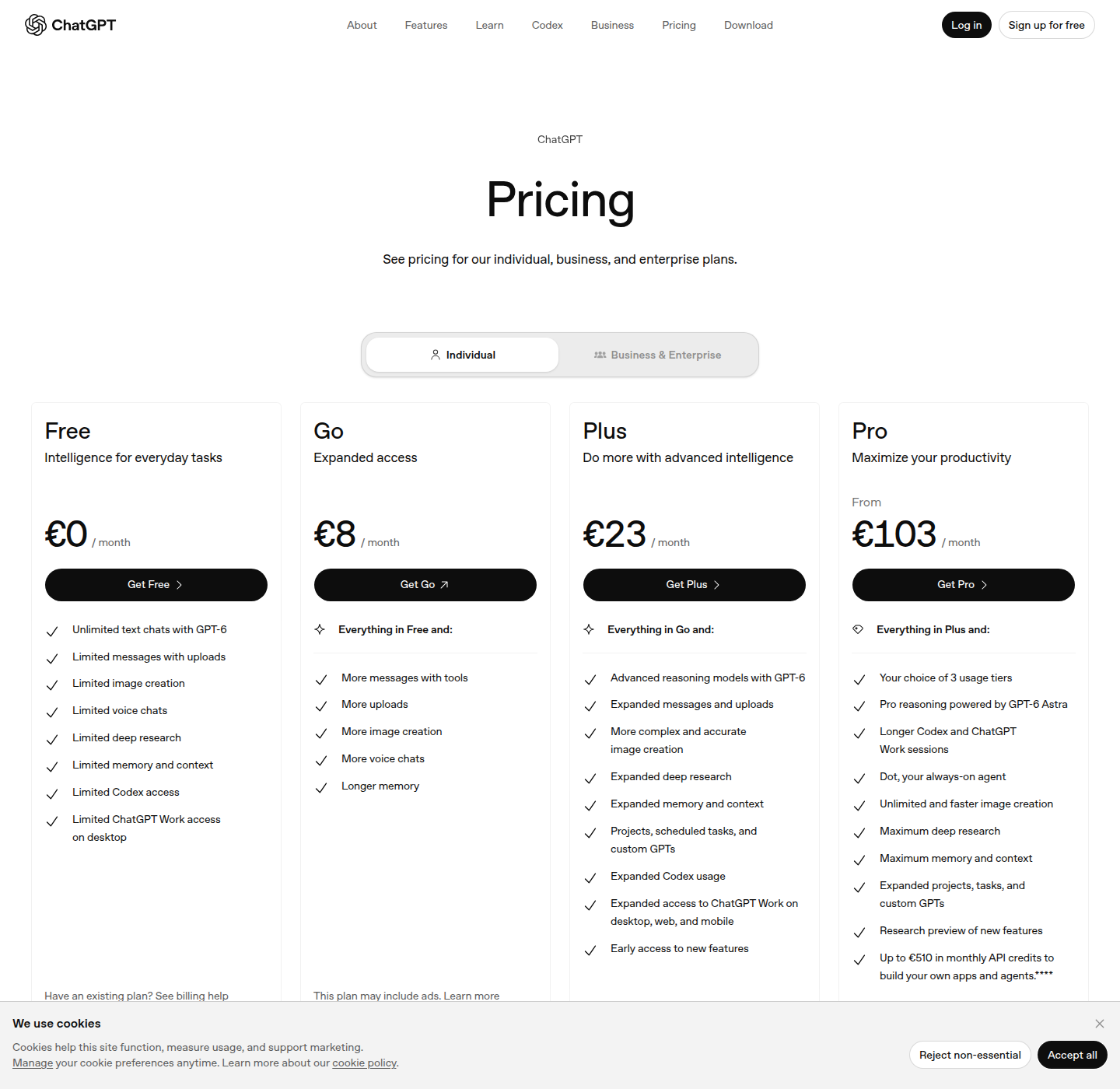
Both products are bundled rather than sold separately. Anthropic’s plan comparison marks Claude Code as available from the Pro tier upward, which Anthropic shows at $17 a month billed annually and $20 monthly. OpenAI ships Codex inside its ChatGPT plans and as a CLI; check which of your plans includes it before buying anything new.
That bundling is the real price question. If you already pay for one of the two, the marginal cost of trying its agent is zero, and the comparison is about workflow rather than money.
Where the work runs
Claude Code runs where you start it. It reads the files in front of it, runs commands, and you watch the changes land in your working tree. That is an advantage when the repository is the source of truth and you want to commit yourself, and a disadvantage when your laptop is not the machine that can run the tests.
Codex offers the opposite shape: you describe the task and it can work in a cloud environment, then hand back a branch or a pull request. That suits a queue of small tasks you do not want to babysit, and it fails you when the task needs a credential or a database that only exists on your machine.
How to judge the output
Do not judge either tool on a greenfield script. Give it a task inside a real repository: rename a concept across five files, add a test for a function that has none, or fix a bug you already fixed by hand last month. You know the correct answer, so you can measure the diff instead of admiring it.
Score three things: how many files it touched that it should not have, whether it ran the tests it claimed to run, and how much of the diff you had to rewrite. An agent that produces a small correct diff is worth more than one that produces a large plausible one, because review time is the cost you are actually paying.
The limits worth knowing before you commit
Both are bounded by the subscription’s usage limits, and both will stop in the middle of a long task when you reach them. Both also inherit the quality of your instructions: an agent asked to “make the tests pass” will find a way, including deleting the assertion. Write the constraint into the prompt and put the test command in the repository where the agent can find it.
Frequently asked questions
**Do I need a separate subscription?** No. Claude Code is included from Claude Pro upward according to Anthropic’s plan table, and Codex is part of OpenAI’s ChatGPT plans. Verify against your own plan before assuming either.
**Which one is better for a beginner?** Neither is a beginner tool in the sense of a chatbot. Both assume you can read a diff and run a command. If that is not yet true, start with a chat assistant and come back when you have a repository with tests.
**Can I use them on the same repository?** Yes, and it is a reasonable way to compare them: give the same task to each on two branches, then look at the two diffs side by side.