OpenAI published a study of how 1,819 scientists used ChatGPT on November 16, 2026, built on 580,186 messages from a free summer pilot. Its headline claim is a time ratio: the same work, at the same quality, would have taken 1.9 times as long without the model.
What was actually released
A research report, a downloadable paper and a set of key takeaways, all from OpenAI’s Economic Research team. The usage data covers the ChatGPT for Academic Researchers plan from August 20 to September 22, 2026: 1,819 scientists, 580,186 messages, sorted by automated classifiers into categories such as reviewing literature, writing code and analyzing data. The team saw the categories, not the messages, and training is off by default on that plan. The survey ran from September 30 to October 7, 2026, with 251 responses.
- 68% of the scientists used ChatGPT to develop research ideas, counted as at least three ideation messages.
- Of those messages, 35% carried a question the scientist brought, 36% refined the scientist’s own idea, and 23% asked the model to propose the question.
- 98% of the scientists who answered a question on discovery timelines expected AI to speed up discovery in their field.
| Measure | Figure | What it actually is |
|---|---|---|
| Messages analyzed | 580,186 | Classifier output, August 20 to September 22, 2026 |
| Scientists in the pilot | 1,819 | Users of the free academic plan |
| Used ChatGPT for ideas | 68% | At least three ideation messages |
| Time without AI, same work | 1.9 times | Self-reported, 249 to 251 answers per activity |
| Expect faster discovery | 98% | Of the 250 who answered, several fields allowed |
| Why they expect it | 52% faster, 23% better questions, 14% wider range | 367 reasons in 224 written answers |
Figures as published on the OpenAI page, read on November 17, 2026. The right-hand column is ours: it says what each number is made of.
The line that changes a budget: OpenAI says it is expanding the plan, with free access for more than 200,000 researchers worldwide. The pilot had 1,819.
What to remember
- A usage study, not a test: it counts what 1,819 scientists asked, and what 251 of them said.
- 1.9 times is a self-reported ratio, averaged over eight research activities.
- The concrete commitment is access, not speed.
What the claim rests on
The 1.9 times is a survey answer. Respondents were asked how long the same work at the same quality would have taken without AI, across eight activities, with 249 to 251 answers per activity and every activity weighted equally. The quality half of that sentence is the part nobody measured: the estimate assumes the output with AI would have been as good as the output without it, which is the one thing the person doing the work cannot check from the inside. The page adds that when a scientist reported no AI use for an activity, the time was counted as unchanged, a choice that pushes the average down rather than up.
The 98% is a share of expectations. 250 respondents were asked to imagine a discovery that would take ten years without AI and to say how soon they expected it with AI. They could select several fields, so the groups overlap, and the page gives no single-field figure in the text. OpenAI’s own limitations say it plainly.
Productivity is self-reported, and discovery results are expectations. These findings do not establish causal effects.
The sample is self-selected: 251 responses out of 1,819 scientists is about 14% of the pilot, and the pilot is a group that signed up for a free program inside a 34-day window. These figures describe scientists who chose to use a chatbot, on the days they chose to use it.
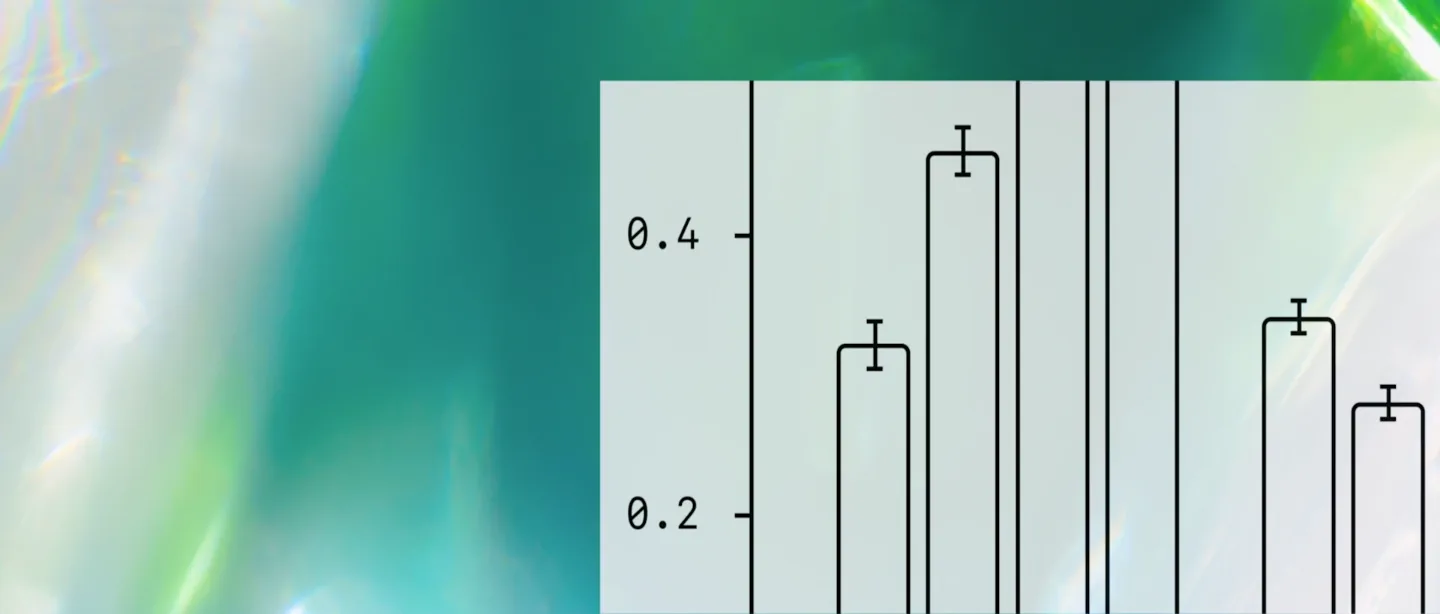
The one behavioral measure is what OpenAI calls the scientist involvement score: requests for clarification, checking or revision that appear in the next scientific message of the same conversation within seven days, averaged per scientist and per activity. It is the closest thing here to a test of whether people catch the model’s mistakes, and the page shows it as a chart per activity, with no figure in the text.
What is not published
No control group and no matched-task measurement, so productivity estimates a counterfactual rather than timing a task. No independent replication. No numbers for the involvement score in the text, and no field-level breakdown of the discovery answers.
On this page
What it changes for a lab lead buying AI seats
The actionable item is the access, not the ratio. Free access for more than 200,000 researchers replaces a pilot of 1,819, and a lab waiting for the program to widen has a reason to apply now. The report is the argument that ships with it.
The metric worth copying is the involvement score. Whether people check the answer matters more than whether they like it, and a follow-up rate within seven days needs no survey: the conversation records you already hold carry it.
On budget, 1.9 times is an estimate of an estimate, so it will not carry a procurement review alone. Ask for a matched task instead: same question, same deadline, two people, one with the tool. That costs a week and produces a figure you can defend. On data, a commercial seat does not inherit the academic plan’s default of training off.
The Neural Minute take
The number that will travel is 47%. Take the report at its word and work that takes 1.9 times as long without AI is work that AI does in about 53% of the time, so the saving is a little under half. That figure sits three steps from anything measured: a self-reported ratio, averaged over eight activities, from people who chose to answer.
We have covered OpenAI’s own research before, and the pattern holds: the company publishes its own measurement, the caveats are correct and easy to find, and the caveat is what a headline drops. In the mathematics release of October 2026, the 42% machine-checked mattered more than the 372 results. Here the sentence that matters is quoted above.
What is genuinely new is the ideation split. 23% of the messages about research ideas asked the model to propose the question, and a question suggested by a model trained on the literature will tend to look like the literature. 36% refined the scientist’s own idea, an assistant used as an editor, and 35% carried a question already formed, an assistant used as a tool. This is the first count of those three habits we have seen from OpenAI, and it says more about research than any time ratio.
The thing to watch is whether the involvement score gets published as numbers, per activity, with the field breakdown of the discovery answers. A follow-up rate that holds as usage grows is evidence scientists are checking. A rate that falls is evidence the tool is trusted more as it is read less, and that failure is invisible from outside a lab.
Until then, treat the report as what it is: a well-built usage study, run by the vendor, on people who opted in, with a self-reported productivity estimate on top. Enough to tell your team where it stands. Not enough to price a seat.
Sources
- Science at the frontier, openai.com, published November 16, 2026: https://openai.com/index/science-at-the-frontier
- All figures read there on November 17, 2026: 580,186 messages, 1,819 scientists, the August 20 to September 22 window, 251 responses, 68% ideation use, the 35/36/23/6 split, 1.9 times, 98%, more than 200,000 researchers.
- The limitations paragraph of the same page is the basis for the caveats here. No third-party source is used.